


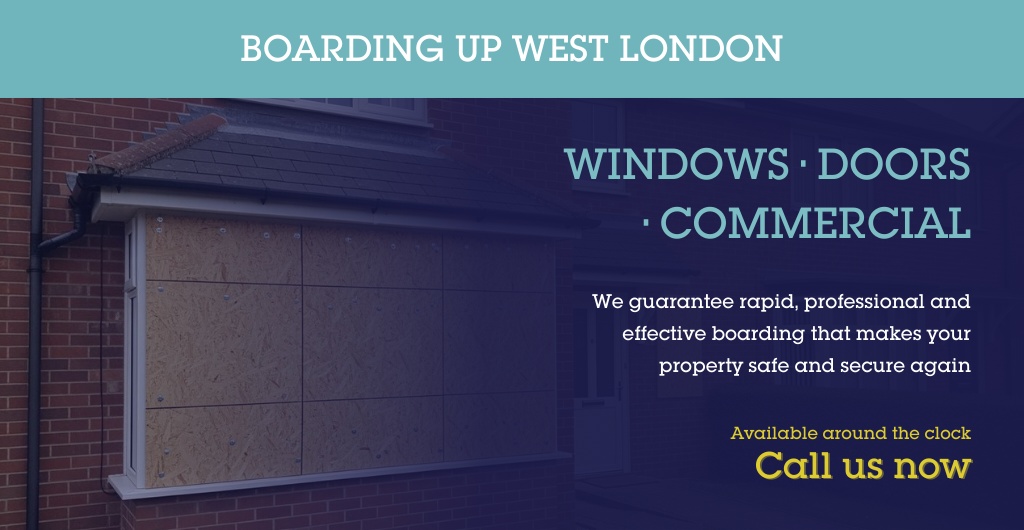
Boarding Up for Vacant Properties in West London (W2–W14)
Vacant properties attract attention—especially in busy parts of West London where footfall is high and neighbours come and go. If you’re responsible for an empty flat, a void house between tenancies, a boarded-up shop awaiting fit-out, or a long-term empty building, we provide boarding up and physical security across the W postcodes to help reduce the risk of break-ins, weather damage and ongoing nuisance.
We work with landlords, managing agents, probate representatives, facilities teams and developers to secure empty buildings quickly and sensibly—without doing anything that makes later reinstatement harder than it needs to be. If you need urgent help tonight, use our emergency boarding up service.
Ready to secure a vacant property? Call 020 4634 8072 or email info@boarding-up-west-london.co.uk.
Why vacant properties in West London need a different approach
A lived-in home has natural deterrents: lights, noise, post being taken in, and people coming and going. A vacant property is the opposite—quiet, dark, and often clearly empty. In West London that can be a particular issue:
- High footfall areas near transport hubs like Shepherd’s Bush, Hammersmith and Paddington can mean more opportunistic attempts at entry.
- Mixed residential/commercial streets (for example around Notting Hill Gate or West Kensington) can bring late-night activity and passing traffic.
- Period buildings and conversions—common across W2, W8, W9 and W14—often have older timber frames, sash windows, basement lightwells and rear access routes that need thoughtful securing.
The goal isn’t to “turn it into a fortress”; it’s to make forced entry harder, reduce visibility of vulnerabilities, and protect the building fabric while it’s empty.
Typical scenarios we’re called out to
Vacant properties don’t all become vacant for the same reason. The “right” method depends on the situation, expected timescale, and condition of the openings.
Between tenants (void periods)
A flat or maisonette might sit empty for a few weeks while you redecorate, replace glazing, or wait for a new tenancy. Common issues include:
- Previously damaged windows/doors not yet replaced
- Rear doors or French doors that are easy targets
- Letterbox tampering or lock snapping attempts
For these short voids, targeted boarding and better fixings can be enough—without blocking ventilation or access for contractors.
After a break-in or attempted break-in
Once a property has been targeted, it may be targeted again—particularly if it’s still obviously empty. We’re often asked to:
- Board broken panes and vulnerable ground-floor windows
- Secure damaged door sets so the property can be re-entered safely
- Upgrade the temporary security level until permanent repairs happen
If you’re dealing with this right now, see our guidance on burglary repairs and securing.
Probate, long-term empty homes and insurance requirements
Longer-term vacancy comes with different pressures: insurers may require “reasonable precautions”, and neighbours may report concerns about squatting, fly-tipping, or antisocial behaviour.
In these cases, we often recommend more durable solutions such as temporary steel doors or steel security screens—depending on access needs and budget.
Vacant commercial units awaiting lease or fit-out
Empty shops and offices can be targeted because the frontage is exposed and visible. A single cracked pane can become a bigger problem quickly.
For shopfronts and commercial glazing, we’ll look at:
- How the unit is positioned on the street (recessed entrances, shutters, canopy coverage)
- Whether there’s ongoing contractor access
- Whether you need the frontage closed fully or partially for light/inspection
Explore shopfront boarding if you’re responsible for a retail unit.
Storm and weather exposure
When a property is empty, small defects become bigger fast—especially if rainwater gets in through a missing pane or a damaged rooflight. We regularly attend void properties after:
- Wind-blown sash windows or broken glazing bars
- Loose panels and access points created by debris
- Damaged rooflights or skylights on extensions and top floors
If weather has caused the issue, start with storm damage securing and consider roof boarding where required.
How we secure vacant properties (our methods)
We’ll recommend a method based on the risk level, the condition of the frames, and how long the property is likely to remain empty. We’ll also explain any trade-offs (for example, security vs ventilation or access).
1) Plywood or OSB boarding for windows and openings
For most vacant properties, boarding is the quickest way to remove an obvious vulnerability.
What we typically use:
- 18mm exterior-grade plywood for stronger, longer-lasting window boarding
- 12mm OSB for smaller openings or lower-risk areas where appropriate
How it’s fitted (depending on the situation):
- Non-destructive fixings where frames are sound and you want to minimise damage
- Anti-tamper fixings where the property will be unattended and you need a more secure finish
- Internal vs external boarding depending on access, visibility and the risk of removal
If the frames are too rotten, loose, or already shattered, we’ll talk you through what’s realistically possible before proceeding.
Related service: window boarding in West London
2) Door boarding and securing failed entry points
Vacant properties often have door problems: warped timber, broken night latches, split frames, or glazing punched through near the lock. Door boarding can secure a compromised entrance while you arrange a locksmith or replacement.
In some cases, basic boarding isn’t enough—particularly if the door leaf or frame has failed.
Related service: door boarding
3) Temporary steel doors for medium-term vacancy
If your property is likely to be empty for more than a short period, a temporary steel door can be a sensible upgrade. It’s designed to withstand repeated tampering better than timber boarding on a door opening.
A temporary steel door is often appropriate when:
- The original door is beyond economical repair after forced entry
- The property is being refurbished and needs reliable daily contractor access
- You need robust security without permanently changing the structure
This is particularly useful for basement flats, rear service doors, and side entrances that aren’t overlooked.
Related service: door boarding (temporary steel door options can be discussed when you call)
4) Steel security screens for longer-term voids
For longer-term empty buildings, steel security screens (often used on voids and vulnerable ground-floor windows) can offer stronger resistance and better longevity than timber boarding alone. They’re commonly used where repeated targeting is a risk and the property may remain empty for months.
We’ll advise on whether screens are appropriate, as they’re not necessary for every void—and sometimes plywood boarding plus better fixings is the most practical answer.
5) Rooflights, skylights and overhead openings
Vacant properties can be vulnerable through overhead access points—especially rear extensions, loft conversions, and communal stair cores. We can secure rooflights/skylights and exposed openings to reduce water ingress and prevent access.
Related service: roof boarding
What to expect when you book a vacant property boarding job
Vacant property work is often managed remotely (agent, landlord, or facilities manager may not be on-site). We’re used to that. A typical job looks like this:
-
Initial call and risk check
Tell us what’s happened, whether the property is currently open to the elements, and whether there are signs of attempted entry. -
Access arrangements
We can work with keys, key safes, concierge/reception, site contacts, or managing agent access instructions. -
Survey on arrival
We check the openings, frame condition, and any secondary access points (rear alleys, basement lightwells, side gates) that could affect the approach. -
Boarding/securing works
We cut boards to size, fix securely, and aim for a tidy, low-profile finish that still allows future repairs. -
Documentation
Where requested, we provide:- Time-stamped photos (before and after)
- A clear description of what was secured and how
- An itemised invoice suitable for property management records and insurers
If you’re claiming, our insurance claims guidance explains the type of information insurers commonly ask for (we’re not loss adjusters, but we can support your paperwork).
Practical advice for landlords and managing agents
Reduce obvious signs of vacancy
If it’s safe and permitted, small steps can help:
- Arrange for post to be redirected or collected
- Use timer lights (especially in street-facing rooms)
- Keep gardens/tidy external areas maintained
Prioritise ground-floor and rear access points
In West London terraces and conversions, rear access can be as important as the frontage—especially near communal alleys and service routes. We often see properties secured well at the front but left vulnerable at side/rear windows and kitchen extensions.
Balance security with ventilation
Some empty properties (especially after flood or fire damage) need ventilation to reduce damp and odour. We can discuss boarding methods that secure the opening while avoiding fully sealing a property that needs to breathe.
If the vacancy is due to damage, these may help:
- flood damage securing
- fire damage securing (we secure the property—smoke/odour remediation is outside our scope)
A realistic local example (how a void property job often plays out)
A managing agent overseeing a vacant flat in Bayswater (W2) reports a broken sash window after an attempted entry. The flat is on a raised ground floor near busy routes, with scaffolding on a neighbouring building making access easier than usual.
We attend, check the sash frame and surrounding timber for weakness, then install 18mm exterior-grade plywood with anti-tamper fixings to reduce the chance of removal from the street. Because contractors still need daytime access, we keep the main entrance usable and advise on upgrading the front door security if the door set shows splitting around the lock.
After the job, the agent receives before/after photos and an itemised invoice to support their internal reporting and insurer notification.
If you need local help in that area, see boarding up in Bayswater W2.
Areas we cover for vacant property boarding (W2–W14)
We cover West London across the W postcode area, including residential streets, mansion blocks, and commercial corridors. Common call-out areas include:
- W12: Shepherd’s Bush and White City – see boarding up in Shepherd’s Bush W12 and boarding up in White City W12
- W14: Olympia and West Kensington – see boarding up in Kensington Olympia W14 and boarding up in West Kensington W14
- W3/W5: Acton and Ealing corridors – see boarding up in Acton W3 and boarding up in Ealing W5
For a broader overview, visit our areas we cover.
FAQs: Vacant property boarding up in West London
How long can boarding stay on a vacant property?
It depends on exposure and the fixing method. Plywood boarding can be used short-to-medium term, but for longer voids (and repeat targeting), steel options may be more suitable. If you tell us your expected vacancy period, we’ll recommend a sensible approach.
Is boarding up covered by insurance for an empty building?
Often it can be, especially after an insured event like burglary, storm damage or accidental impact—but policies vary, and vacancy can change the terms. We can provide photos and a work description to support your claim; see insurance claims help.
Can you secure a vacant property if no-one can meet you on-site?
Yes. We regularly work with managing agents and landlords using key safes, concierge desks, or pre-arranged access instructions. If there are any site rules (parking, loading, working hours), tell us when you book.
Do you board up from the inside or the outside?
Either, depending on access and security needs. External boarding is often more secure against tampering, but internal boarding can be appropriate where you want a cleaner exterior or where access makes external work difficult. We’ll choose the safest practical option.
We have a vacant unit near Shepherd’s Bush—can you cover it?
Yes. We work across W12 and surrounding districts, including busy routes around the shopping and transport areas. Start with boarding up in Shepherd’s Bush W12 or call us to discuss the specific unit.
Next steps: secure your vacant property
If your building is empty—even temporarily—securing it early usually prevents bigger issues later. We’ll talk you through options, explain what’s practical on your specific openings, and provide clear documentation for your records.
Ready to get started? Call 020 4634 8072 or email us for a free, no-obligation quote.
